Cats may spend a large part of the day sleeping, but they still need opportunities to move, explore, play, and use their natural instincts. This is especially important for indoor cats, which may have fewer opportunities to explore and hunt compared with cats that spend time outdoors.
Keeping your cat active doesn’t mean constantly entertaining them. A few short play sessions, an interesting environment, and opportunities to explore can make a significant difference.
1. Give Your Cat Daily Playtime
Interactive play is one of the simplest ways to keep your cat physically and mentally active.
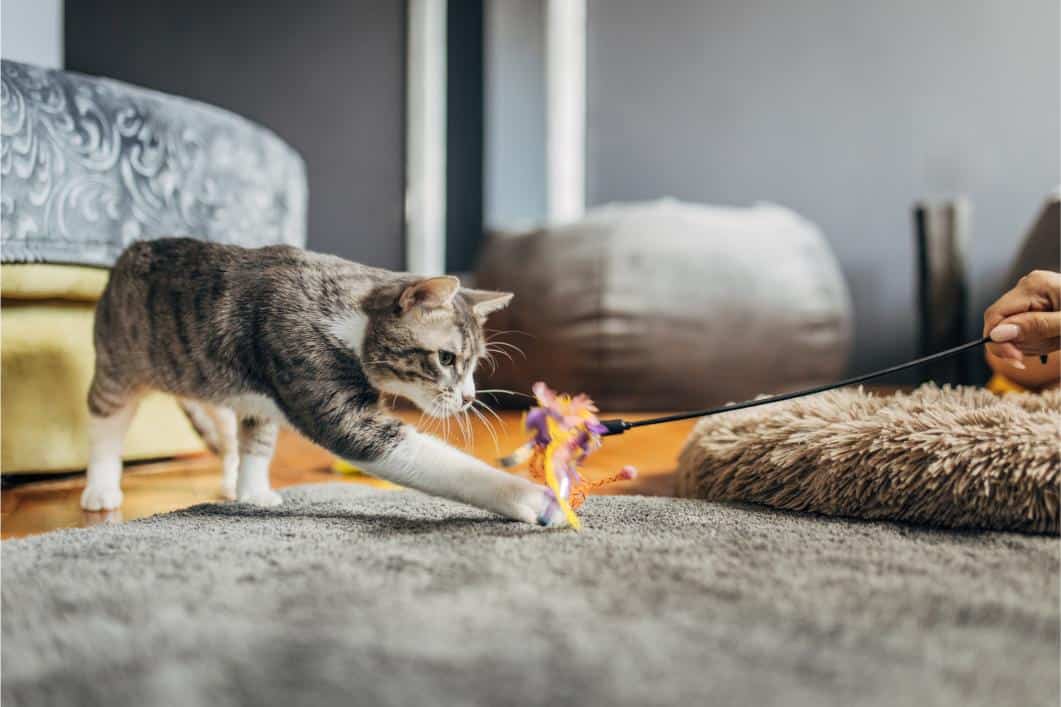
Many cats enjoy games that allow them to chase, pounce, and stalk. Try using toys that move unpredictably rather than simply leaving a toy on the floor.
Good options include:
- Wand toys
- Toy mice
- Balls
- Lightweight toys they can chase
- Toys that mimic prey
Short play sessions throughout the day can work particularly well because they match the way cats naturally alternate between periods of activity and rest.
2. Use Toys That Encourage Hunting
Cats have natural hunting instincts, even when they have never needed to hunt for food.
Toys that encourage your cat to stalk, chase, and pounce can provide useful mental stimulation.
Move a wand toy along the floor, hide it behind furniture, or make it move away from your cat before allowing them to catch it.
Letting your cat occasionally catch the toy is important. Constantly preventing them from completing the chase can become frustrating rather than rewarding.
3. Rotate Your Cat’s Toys
You don’t need to leave every toy available all the time.
If your cat has access to the same toys every day, they may eventually become less interesting.
Instead, keep some toys stored away and rotate them every few days.
For example, you might provide:
- Wand toys one day
- Balls and small toys another day
- Puzzle toys later in the week
You can then bring previously stored toys back into the rotation to make them feel more interesting again.
4. Provide Places to Climb
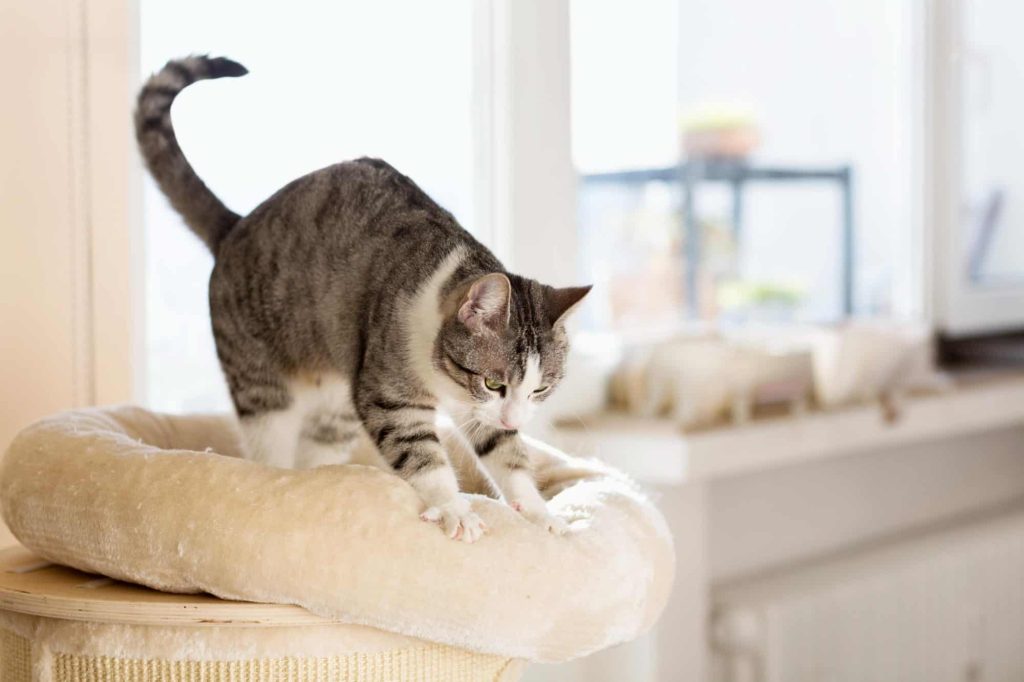
Cats naturally enjoy being able to climb and observe their surroundings from elevated positions.
A cat tree, sturdy shelf, or other safe elevated area can provide both physical activity and mental stimulation.
Vertical spaces can also give cats a place to retreat when they want some privacy.
Make sure anything your cat is allowed to climb is stable and secure. Avoid placing climbing surfaces near unstable objects or dangerous heights.
5. Give Your Cat Safe Places to Hide
Hiding isn’t necessarily a sign that your cat is unhappy. Cats often enjoy having quiet places where they can retreat and rest.
You can provide:
- Cat beds
- Cardboard boxes
- Covered beds
- Cat tunnels
- Quiet corners
- Safe spaces under appropriate furniture
Having multiple options allows your cat to choose where they feel most comfortable.
Boxes can be particularly useful because they are inexpensive and many cats naturally enjoy exploring them.
6. Try Food Puzzles
Food puzzles can turn mealtime into a form of mental stimulation.
Instead of always providing food in the same bowl, you can occasionally use a suitable puzzle feeder that requires your cat to work for small amounts of food.
This can encourage behaviors such as:
- Pawing
- Searching
- Exploring
- Problem-solving
Introduce puzzles gradually. If the puzzle is too difficult, your cat may become frustrated and simply lose interest.
7. Create Opportunities to Watch the Outside World
Windows can provide hours of entertainment for some indoor cats.
A secure window perch can allow your cat to watch:
- Birds
- Insects
- People
- Trees
- Moving objects
- Outdoor activity
Make sure the window itself is secure and cannot allow your cat to escape or fall.
You can also provide visual stimulation through safe areas where your cat can observe what’s happening around the home.
8. Give Your Cat Safe Things to Scratch
Scratching is a normal feline behavior and provides both physical and mental stimulation.
Provide appropriate scratching surfaces such as:
- Vertical scratching posts
- Horizontal scratchers
- Cardboard scratchers
- Other sturdy cat-specific scratching surfaces
Place scratching areas where your cat is already interested in scratching.
For example, if your cat scratches near a particular piece of furniture, placing an appropriate scratching surface nearby may encourage them to use it instead.
9. Make Play Part of Your Routine
Cats often benefit from predictable periods of activity.
You might have a short play session:
- In the morning
- After you return home
- Before an evening meal
- Before bedtime
You don’t need to spend an hour playing with your cat. Several short sessions can be easier to maintain and may better match your cat’s natural activity patterns.
Pay attention to when your cat is naturally most energetic and schedule play around those periods when possible.
10. Change the Environment Occasionally
Cats can benefit from safe changes to their environment.
You don’t need to completely rearrange your home. Small changes can be enough to give your cat something new to investigate.
You might:
- Introduce a new cardboard box
- Move a scratching post
- Add a new safe toy
- Create a new resting area
- Rotate toys
- Set up a new window perch
- Introduce a tunnel
Give your cat time to investigate new objects at their own pace.
Signs Your Cat May Need More Stimulation
Every cat has a different personality, and some are naturally more active than others.
However, boredom or insufficient stimulation may sometimes contribute to behaviors such as:
- Excessive attention-seeking
- Destructive scratching
- Persistent nighttime activity
- Chasing or attacking feet and hands
- Excessive vocalization
- Restlessness
- Repetitive behaviors
These behaviors can have many possible causes, so don’t automatically assume boredom is responsible.
If your cat’s behavior changes suddenly or becomes persistent, consider discussing it with your veterinarian.
Avoid Using Your Hands as Toys
It can be tempting to play with a kitten by letting them chase or bite your fingers.
However, this can teach your cat that human hands are appropriate targets for biting and scratching.
Instead, use toys that create distance between your hands and your cat, such as wand toys or small objects they can safely chase.
This is particularly important when raising kittens because habits learned early can continue into adulthood.
Keep Toys Safe
Not every toy should be left with your cat unsupervised.
Strings, small pieces, loose attachments, and other objects can potentially become choking hazards or cause problems if swallowed.
Inspect toys regularly and remove anything that has become damaged.
If your cat tends to chew or swallow pieces of toys, choose safer alternatives and supervise play more closely.
How Much Activity Does Your Cat Need?
There isn’t one exact amount of play that every cat requires.
A kitten may want several energetic play sessions throughout the day, while a senior cat may prefer shorter and gentler activities.
Factors such as age, health, personality, weight, and living environment can all affect how much activity your cat needs.
The goal isn’t to keep your cat constantly moving. Instead, provide regular opportunities for appropriate physical activity and mental stimulation.
The Bottom Line
Keeping your cat active doesn’t require complicated equipment or constant attention. Regular play, scratching surfaces, climbing opportunities, food puzzles, and an interesting environment can provide plenty of stimulation.
Pay attention to what your cat enjoys and rotate activities so they don’t become repetitive.
For indoor cats in particular, creating an environment that encourages natural behaviors such as chasing, climbing, scratching, hiding, and exploring can help make everyday life more engaging and enjoyable.