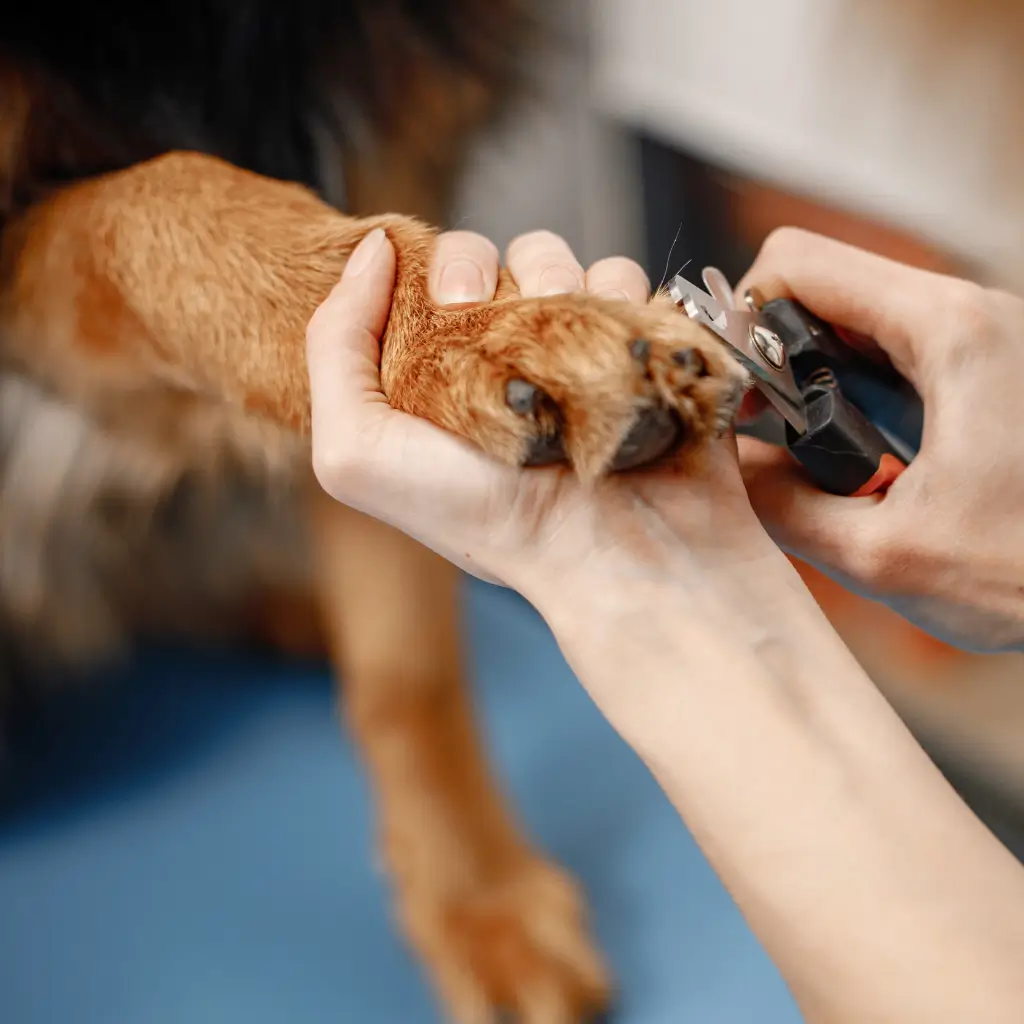
Regular nail trimming is an important part of your dog’s grooming routine. When nails become too long, they can become uncomfortable, affect the way your dog walks, and potentially break or split.
Some dogs naturally wear their nails down through regular activity, while others need routine trimming. Learning how to trim your dog’s nails safely can make the process easier and more comfortable for both of you.
1. Check Your Dog’s Nails Regularly
There isn’t one exact schedule for every dog. Instead, check your dog’s nails regularly to see whether they need trimming.
Signs that your dog’s nails may be getting too long include:
- Nails touching or clicking on hard floors
- Nails extending noticeably beyond the paw
- Difficulty walking comfortably
- Nails catching on carpets or other surfaces
- Changes in the way your dog stands or walks
- Nails beginning to curl
Some dogs may need their nails trimmed every few weeks, while others may need it less frequently.
2. Choose the Right Nail Clippers
Use nail clippers specifically designed for dogs.
The appropriate type and size depend on your dog’s size and nail thickness. Using a tool that is too small or unsuitable can make trimming more difficult.
Have treats nearby as well. Rewarding your dog throughout the process can help make nail trimming a more positive experience.
3. Get Your Dog Comfortable With Paw Handling
If your dog isn’t used to having their paws touched, don’t immediately try to trim all of their nails.
Start by gently touching a paw for a few seconds. Reward your dog if they remain calm, then stop.
Over several sessions, gradually work toward:
- Holding the paw
- Touching individual toes
- Handling the nails
- Bringing the clippers near the paw
- Touching the nail with the clippers
- Eventually trimming a small amount
Taking your time can make future nail trims much easier.
4. Learn About the Quick
One of the most important things to understand before trimming your dog’s nails is the quick.
The quick is the sensitive part inside the nail that contains blood vessels and nerves. Cutting into it can cause pain and bleeding.
With light-colored nails, the quick may be visible as a darker area inside the nail.
Dark nails can be more difficult because the quick may not be easy to see. In these cases, trimming very small amounts at a time can reduce the risk of cutting too far.
If you’re unsure where the quick is, ask a veterinarian or professional groomer to demonstrate the process.
5. Find a Comfortable Position
Choose a calm environment and position your dog in a way that allows you to hold the paw securely without forcing it.
Depending on your dog’s size and temperament, you may be able to trim the nails while they’re standing, sitting, or lying down.
Don’t try to wrestle your dog into position. If they’re struggling heavily, take a break and try again later.
Having another calm person help hold and reassure your dog can also make the process easier.
6. Trim Small Amounts at a Time
When you’re ready to trim, take off a small amount of nail rather than attempting to shorten it significantly in one cut.
This is particularly important when your dog’s nails are dark.
After each small cut, check the nail before deciding whether to remove more.
If your dog becomes uncomfortable, stop and give them a break. You don’t necessarily need to trim every nail during one session.
7. Don’t Forget the Dewclaws
Many dogs have dewclaws higher up on their front legs, and some have rear dewclaws as well.
Because these nails may not make regular contact with the ground, they may not wear down naturally.
Check them during your normal nail inspections and trim them when necessary.
Long dewclaws can eventually curl around and grow toward the skin, which can become painful.
8. Reward Your Dog During the Process
Positive reinforcement can help your dog become more comfortable with nail trimming.
Reward calm behavior with:
- Small treats
- Praise
- Gentle affection
- Short breaks
You don’t have to complete the entire grooming session at once.
For a dog that strongly dislikes nail trimming, successfully trimming one or two nails while keeping them calm can be more useful than forcing the process and creating a negative experience.
9. What to Do If You Cut the Quick
Even when you’re careful, accidents can happen.
If you accidentally cut the quick, the nail may bleed. Stay calm and apply gentle pressure to the area.
A styptic product made for controlling minor nail bleeding can be useful to have available.
If the bleeding doesn’t stop, the injury appears significant, or you’re concerned about your dog, contact your veterinarian.
10. Know When to Get Professional Help
Not every dog is comfortable having their nails trimmed at home.
A veterinarian or professional groomer may be a better option if your dog:
- Becomes extremely anxious
- Struggles aggressively
- Has very thick or dark nails
- Has a history of nail injuries
- Has painful paws
- Won’t allow their feet to be handled
- Makes it difficult to trim the nails safely
Getting professional help is preferable to repeatedly forcing your dog through a stressful or potentially unsafe grooming session.
Common Nail-Trimming Mistakes to Avoid
Cutting too much at once
Removing a large amount of nail increases the risk of hitting the quick.
Rushing
Trying to finish quickly can make both you and your dog more nervous.
Ignoring the dewclaws
Dewclaws can become overgrown even when the other nails appear short.
Holding your dog too tightly
Excessive restraint can increase fear and make future nail trimming harder.
Waiting until nails are extremely long
Regular small trims are generally easier than dealing with severely overgrown nails.
How Often Should You Trim Your Dog’s Nails?
The right frequency depends on your dog’s lifestyle, activity level, nail growth, and the surfaces they regularly walk on.
As a general approach, check your dog’s nails every few weeks and trim them when they become too long.
Dogs that regularly walk on hard surfaces may naturally wear down some nails, while dogs that spend most of their time indoors or on softer surfaces may need more frequent trimming.
The Bottom Line
Regular nail care helps keep your dog comfortable and can support healthy movement. The key is to trim gradually, avoid the quick, and make the experience as calm and positive as possible.
If you’re uncomfortable trimming your dog’s nails or your dog becomes too difficult to handle safely, don’t force the process. A veterinarian or professional groomer can help keep your dog’s nails at an appropriate length.