How to keep an indoor cat happy is easier than you might think. Indoor cats still need opportunities to exercise, explore, play, and satisfy their natural instincts. Without enough stimulation, some cats may become bored, inactive, or develop unwanted behaviors.
Keeping an indoor cat happy doesn’t require a huge amount of space or expensive equipment. With the right environment, regular interaction, and a little variety, you can give your cat plenty to do at home.
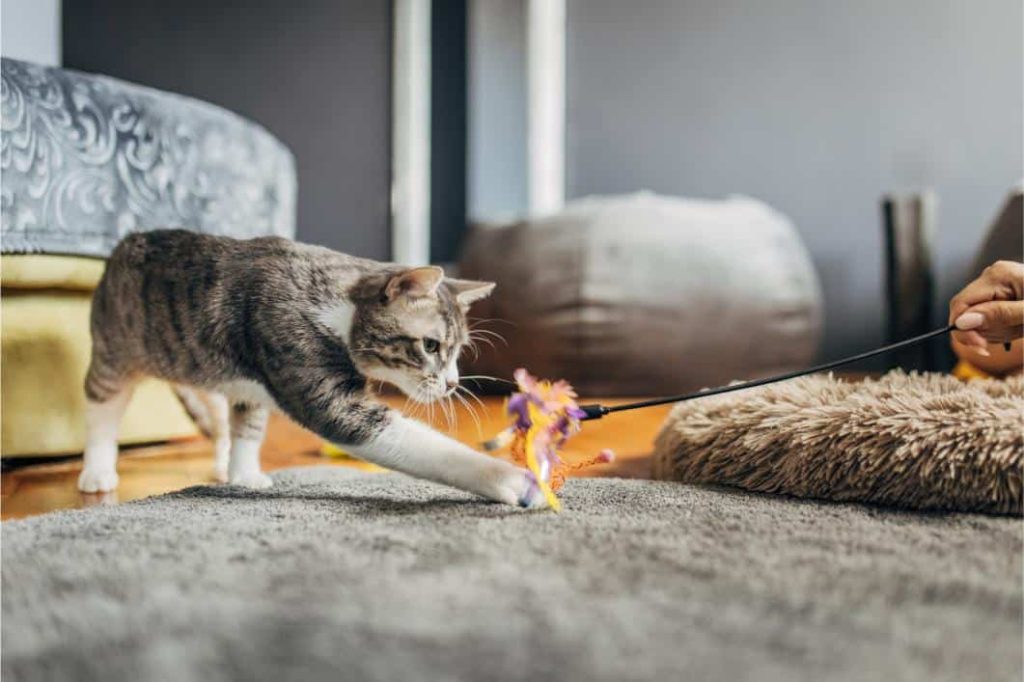
Give Your Cat Plenty of Playtime
Play is one of the easiest ways to keep an indoor cat active and engaged.
Cats naturally enjoy activities that allow them to chase, pounce, stalk, and capture. Interactive toys can help recreate some of these behaviors indoors.
Try activities such as:
- Chasing wand toys
- Playing with toy mice
- Tossing lightweight balls
- Using toys that encourage chasing
- Playing short games throughout the day
Several short play sessions can be more effective than one long session. Try to make playtime a regular part of your cat’s daily routine.
Provide Places to Climb
Cats naturally enjoy being able to climb and observe their surroundings from higher positions.
A cat tree, sturdy shelf, or other safe elevated area can give your cat a place to climb, rest, and observe what’s happening around them.
Vertical space can be particularly useful in smaller homes because it gives your cat additional territory without requiring more floor space.
Make sure any elevated furniture or shelves are stable and securely positioned before allowing your cat to use them.
Give Your Cat Safe Places to Hide
Cats often appreciate having quiet places where they can retreat when they want some privacy.
A cardboard box, covered cat bed, or quiet corner can provide a simple hiding spot.
Having somewhere to retreat can be especially helpful when there are visitors, loud noises, or other changes in the home.
Don’t force your cat out of their hiding place. Allowing them to choose when they want to come out can help them feel more secure.
Use Puzzle Toys and Food Games
Cats need mental stimulation as well as physical exercise.
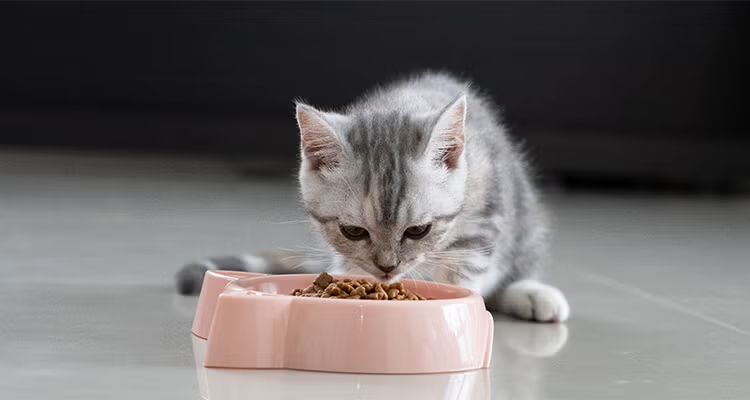
Puzzle feeders and food-based games can encourage your cat to think and work for some of their food instead of simply eating from a bowl.
You can also hide small amounts of their food around safe areas of the home and allow them to search for it.
Start with simple activities and gradually make them more challenging as your cat becomes comfortable with them.
Rotate Your Cat’s Toys
You don’t need dozens of toys to keep your cat entertained.
Instead, try rotating the toys you already have. Put some away for a few days and then bring them back later.
A toy that your cat has ignored for a while may become interesting again when it is reintroduced.
You can also vary the types of toys available, including toys for chasing, batting, climbing, and exploring.
Create a Comfortable Window Spot
Many cats enjoy watching the world outside.
A secure window perch can give your cat an interesting place to watch birds, people, trees, and other activity outside.
Make sure the window is secure and that your cat cannot escape or become injured.
Even if your cat spends most of the day indoors, a good view can provide valuable visual stimulation.
Provide a Scratching Post
Scratching is a natural behavior for cats. It helps them stretch, maintain their claws, and leave scent and visual markings.
Instead of trying to prevent scratching completely, provide appropriate places where s, but they still need opportunities to exercise, explore, play, and satisfy their natural instincts. Without enough stimulation, some cats may become bored, inactive, or develop unwanted behaviors.
Keeping an indoor cat happy doesn’t require a huge amount of space or expensive equipment. With the right environment, regular interaction, and a little variety, you can give your cat plenty to do at home.
Give Your Cat Plenty of Playtime
Play is one of the easiest ways to keep an indoor cat active and engaged.
Cats naturally enjoy activities that allow them to chase, pounce, stalk, and capture. Interactive toys can help recreate some of these behaviors indoors.
Try activities such as:
- Chasing wand toys
- Playing with toy mice
- Tossing lightweight balls
- Using toys that encourage chasing
- Playing short games throughout the day
Several short play sessions can be more effective than one long session. Try to make playtime a regular part of your cat’s daily routine.
Provide Places to Climb
Cats naturally enjoy being able to climb and observe their surroundings from higher positions.
A cat tree, sturdy shelf, or other safe elevated area can give your cat a place to climb, rest, and observe what’s happening around them.
Vertical space can be particularly useful in smaller homes because it gives your cat additional territory without requiring more floor space.
Make sure any elevated furniture or shelves are stable and securely positioned before allowing your cat to use them.
Give Your Cat Safe Places to Hide
Cats often appreciate having quiet places where they can retreat when they want some privacy.
A cardboard box, covered cat bed, or quiet corner can provide a simple hiding spot.
Having somewhere to retreat can be especially helpful when there are visitors, loud noises, or other changes in the home.
Don’t force your cat out of their hiding place. Allowing them to choose when they want to come out can help them feel more secure.
Use Puzzle Toys and Food Games
Cats need mental stimulation as well as physical exercise.
Puzzle feeders and food-based games can encourage your cat to think and work for some of their food instead of simply eating from a bowl.
You can also hide small amounts of their food around safe areas of the home and allow them to search for it.
Start with simple activities and gradually make them more challenging as your cat becomes comfortable with them.
Rotate Your Cat’s Toys
You don’t need dozens of toys to keep your cat entertained.
Instead, try rotating the toys you already have. Put some away for a few days and then bring them back later.
A toy that your cat has ignored for a while may become interesting again when it is reintroduced.
You can also vary the types of toys available, including toys for chasing, batting, climbing, and exploring.
Create a Comfortable Window Spot
Many cats enjoy watching the world outside.
A secure window perch can give your cat an interesting place to watch birds, people, trees, and other activity outside.
Make sure the window is secure and that your cat cannot escape or become injured.
Even if your cat spends most of the day indoors, a good view can provide valuable visual stimulation.
Provide a Scratching Post
Scratching is a natural behavior for cats. It helps them stretch, maintain their claws, and leave scent and visual markings.
Instead of trying to prevent scratching completely, provide appropriate places where your cat can scratch.
Place scratching posts or pads near areas where your cat already likes to scratch, such as near their sleeping area or furniture.
Offer different types of scratching surfaces to see which your cat prefers.
Spend Quality Time With Your Cat
Cats may be independent, but they still benefit from positive interaction with their owners.
Spend time playing, grooming, training, or simply sitting with your cat. Let your cat decide when they want attention and avoid forcing interaction.
Even a few minutes of focused attention throughout the day can provide useful social and mental stimulation.
How to Keep an Indoor Cat Happy Every Day
A predictable environment can be comfortable, but too little variety may leave an indoor cat bored.
You can introduce small changes to keep your cat interested, such as new toys, different puzzle games, new places to explore, or a new scratching surface.
Avoid changing everything at once. Introducing new experiences gradually can make them easier for your cat to accept. Follow these how to keep an indoor cat happy
Create a Daily Routine
A consistent routine can help your cat know when to expect meals, playtime, and interaction.
For example, you might include:
- Morning feeding
- Short play session
- Independent toy time
- Afternoon rest
- Evening interactive play
- Puzzle feeder or food game
The exact routine will depend on your cat’s personality and needs.
Watch for Signs of Boredom
Even with plenty of toys and activities, some cats may still become bored.
Possible signs include excessive vocalization, destructive behavior, overeating, sleeping much more than usual, or repeatedly seeking attention.
These behaviors can have other causes, including stress or medical problems. If you notice sudden or persistent changes in your cat’s behavior, speak with your veterinarian.
The Bottom Line
How to keep an indoor cat happy comes down to providing opportunities for physical activity, mental stimulation, exploration, scratching, hiding, and positive interaction.
You don’t need a large home or expensive equipment. Regular play, safe climbing and hiding areas, puzzle toys, scratching posts, and a little variety can help create a more enriching environment.
Pay attention to your cat’s individual preferences and behavior, and adjust their environment as needed. If you notice significant or sudden behavioral changes, consult your veterinarian.