Bathing is an important part of keeping your dog clean and comfortable, but most dogs don’t need to be bathed as frequently as people do. Bathing your dog too often can remove natural oils from their skin and potentially cause dryness or irritation.
So, how often should you bathe your dog? The answer depends on several factors, including their coat, skin, lifestyle, and how much time they spend outdoors.
How Often Should You Bathe Your Dog?
For many healthy dogs, a bath every few weeks to a few months may be enough. Some dogs may need more frequent baths, while others can go considerably longer between baths.
There isn’t a single schedule that works for every dog. Instead, consider your dog’s individual needs.
You may need to bathe your dog more often if they:
- Spend a lot of time outdoors
- Frequently get dirty or muddy
- Have a long or thick coat
- Swim regularly
- Have a tendency to develop a noticeable odor
- Have a skin condition for which your veterinarian recommends regular bathing
Dogs that spend most of their time indoors and stay relatively clean may need baths less frequently.
What Determines How Often Your Dog Needs a Bath?
Coat Type
Your dog’s coat can have a significant effect on their bathing needs.
Dogs with long, thick, or dense coats may collect more dirt and debris and may require more grooming. Regular brushing can help remove loose hair and dirt between baths.
Dogs with short coats may stay cleaner for longer, although they still need occasional bathing.
Lifestyle
A dog’s lifestyle also matters.
An active dog that regularly plays outside, hikes, swims, or rolls around in dirt will probably need more frequent baths than a dog that spends most of the day indoors.
If your dog gets particularly dirty after an outdoor adventure, you may need to clean them even if their next scheduled bath isn’t due.
Skin and Health
Some dogs have sensitive skin or specific dermatological conditions that require a particular bathing routine.
If your veterinarian recommends medicated baths, follow their instructions regarding the type of shampoo and how frequently to bathe your dog.
If your dog develops persistent itching, redness, unusual odor, sores, or other skin changes, a bath may not be enough to address the underlying problem. Your veterinarian can help determine what is causing the issue.
Signs Your Dog May Need a Bath
You don’t necessarily need to follow a strict calendar when deciding when to bathe your dog.
Some signs that your dog may need cleaning include:
- A strong or unusual odor
- Visible dirt or mud in their coat
- Greasy or noticeably dirty fur
- Dirt accumulated after outdoor activities
- A coat that looks dull or unkempt
- Something unpleasant stuck in their fur
However, a bad smell that returns quickly after bathing can sometimes indicate an underlying skin, ear, dental, or other health problem.
How to Bathe Your Dog Properly
Once you’ve decided that your dog needs a bath, preparation can make the process much easier.
1. Brush Your Dog First
Brush your dog before getting them wet. This helps remove loose hair, dirt, and tangles.
Mats can become more difficult to remove once they’re wet, so dealing with them beforehand is usually easier.
2. Use Dog-Safe Shampoo
Always use a shampoo specifically designed for dogs.
Human shampoos can be too harsh for a dog’s skin because dogs have different skin needs. If your dog has sensitive skin or a medical condition, ask your veterinarian which type of shampoo is appropriate.
3. Use Comfortable Water
Use lukewarm water rather than water that is extremely hot or cold.
Make sure your dog is comfortable throughout the bath. Some dogs become anxious around running water, so introducing them to bathing gradually can help.
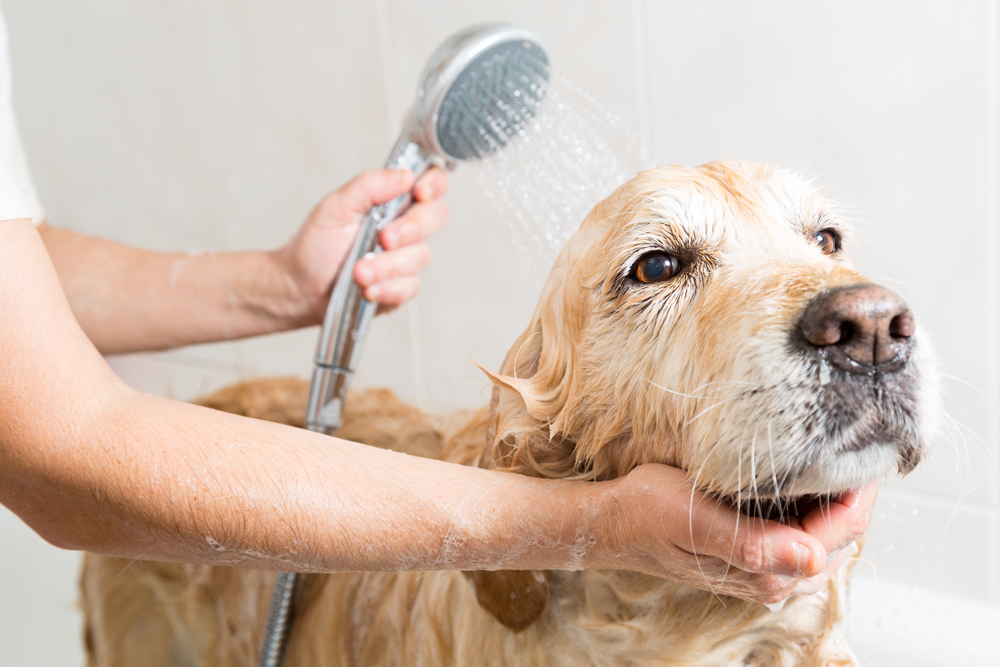
4. Wet the Coat Thoroughly
Start by thoroughly wetting your dog’s coat while avoiding their eyes and ears.
Apply the shampoo and gently work it through the coat. Pay attention to areas that tend to become particularly dirty, such as the paws and underside.
5. Rinse Thoroughly
Rinsing is one of the most important parts of bathing your dog.
Make sure you remove all of the shampoo from their coat. Shampoo residue left on the skin can cause irritation or itching.
6. Dry Your Dog
After rinsing, gently towel-dry your dog.
Depending on your dog’s coat, you may need to brush them again once they’re partly dry. If you use a blow dryer, keep it on a comfortable setting and avoid using excessive heat.
Make sure your dog is completely dry, particularly if they have a thick coat.
How Often Should You Bathe a Puppy?
Puppies generally don’t need frequent full baths unless they become particularly dirty.
Young puppies can be sensitive to temperature changes, so keep bathing sessions short and make sure they are dried and kept comfortable afterward.
You can also use a damp cloth to clean small areas when a full bath isn’t necessary.
As your puppy gets older, gradually introduce them to bathing so that it becomes a normal part of their grooming routine.
Can You Bathe Your Dog Too Often?
Yes. Bathing your dog too frequently can potentially dry out their skin and remove some of the natural oils that help keep their coat healthy.
Over-bathing may contribute to:
- Dry or flaky skin
- Itching
- Skin irritation
- A dull-looking coat
- Increased sensitivity
This doesn’t mean you should avoid bathing your dog. It simply means that bathing should be appropriate for your dog’s individual needs.
If your dog seems to develop skin problems after regular baths, consider discussing their bathing routine and shampoo with your veterinarian.
What About Dogs That Swim?
Dogs that frequently swim may need additional cleaning, particularly if they swim in dirty or contaminated water.
After swimming, rinsing your dog with clean water can help remove dirt and other substances from their coat. Make sure they are dried properly afterward.
Regular swimming can also mean paying extra attention to the ears, especially if your dog is prone to ear problems.
Keeping Your Dog Clean Between Baths
Your dog doesn’t need a full bath every time they get slightly dirty.
Between baths, you can help keep your dog clean by:
- Brushing regularly
- Wiping dirty paws after walks
- Cleaning small dirty areas with a damp cloth
- Washing their bedding regularly
- Keeping their living area clean
- Checking their coat after outdoor activities
Regular brushing is particularly useful because it can remove loose hair, dirt, and debris while helping keep the coat looking healthy.
The Bottom Line
There is no universal bathing schedule for every dog. Many healthy dogs can go several weeks or even longer between baths, while dogs with certain coats, lifestyles, or skin conditions may need more frequent cleaning.
Rather than bathing your dog simply because a certain number of days have passed, consider their coat, activity level, cleanliness, and overall skin health.
With regular brushing and occasional baths when needed, you can help keep your dog’s coat clean, comfortable, and healthy.