
A cat’s coat is more than just its fur and pride. Cats spend hours grooming themselves, so changes in their coat can sometimes indicate that something is wrong.
Cat fur problems can include hair loss, oily or greasy fur, changes in fur texture and dandruff. These symptoms may be caused by anything from stress and allergies to parasites or underlying health conditions.
Here is a guide to some common cat coat problems, their potential causes and when you should speak to your veterinarian.
Cat Hair Loss
Unless your cat is a hairless breed, it should be relatively easy to notice unusual fur loss beyond normal shedding. Excessive hair loss is known as alopecia and can occur in a small area or across larger parts of the body.
Hair loss may happen suddenly or gradually, and some cats may develop bald patches while others experience more general thinning.
Some common causes of cat hair loss include:
- Stress and anxiety: Cats experiencing anxiety or stress may over-groom themselves, eventually causing areas of fur loss.
- Hyperthyroidism: This hormonal condition can cause changes to a cat’s coat and may contribute to hair loss.
- Food allergies: Allergic reactions can cause itching and excessive scratching or grooming, resulting in fur loss.
- Environmental allergies: Allergens in a cat’s environment can cause itchy skin and excessive grooming.
- Flea allergy dermatitis: Some cats are highly sensitive to flea bites, and even a small number of bites can cause intense itching and hair loss.
- Ringworm: This fungal infection can cause areas of hair loss and may produce circular bald patches.
- Mange: Certain mites can cause skin irritation, itching and alopecia in cats.
Because different conditions can cause similar symptoms, determining the cause of cat hair loss may require a veterinary examination and, in some cases, diagnostic testing.
For additional information about common feline skin conditions, the Cornell Feline Health Center provides veterinary-reviewed information about cat health.
How Is Cat Hair Loss Treated?
Treatment for cat fur loss depends on the underlying cause.
For example, a veterinarian may recommend parasite control for flea or mite infestations, antifungal treatment for ringworm, or other medication for an underlying medical condition. Allergies may require a different treatment approach.
If your cat develops unexplained bald patches, persistent itching, excessive grooming or significant changes to its coat, schedule an appointment with your veterinarian.
Do not assume that hair loss is simply a grooming problem, particularly if it continues or is accompanied by other symptoms.
Oily or Greasy Fur in Cats
A cat’s fur can become oily, greasy or unusually clumped together when its normal grooming routine changes.
Older cats may have difficulty grooming themselves because of painful joints or mobility problems such as osteoarthritis. Some senior cats may also groom less frequently when they are unwell.
Obesity can make self-grooming more difficult as well, particularly in areas that are difficult for a cat to reach.
When a cat stops grooming normally, natural oils may build up on the coat. The fur may then appear greasy, spiky or clumped together.
Several conditions can contribute to oily cat fur, including:
- Hyperthyroidism: This hormonal disorder can cause changes in a cat’s skin and coat.
- Seborrhea: This skin condition can cause excessive scaling and oily skin or fur. It may be associated with allergies, parasites, nutritional problems or other conditions.
- Diabetes mellitus: Diabetes can contribute to changes in skin and coat health.
- Pain or mobility problems: Arthritis and other painful conditions can make normal grooming difficult.
- Obesity: An overweight cat may have difficulty reaching certain areas of its body when grooming.
Learn more about feline diabetes from the Cornell Feline Health Center
How Can You Treat Oily Cat Fur?
If your cat is struggling to groom itself, gentle brushing may help remove loose fur and distribute natural oils throughout the coat.
However, oily cat fur can be a sign of an underlying health problem, particularly when the change is sudden or persistent.
Rather than relying solely on bathing, have your veterinarian examine your cat if its coat remains greasy or its grooming habits have changed.
Cats generally do not need frequent bathing, and excessive bathing can irritate the skin or interfere with the natural oils that protect the coat.
Cat Dandruff
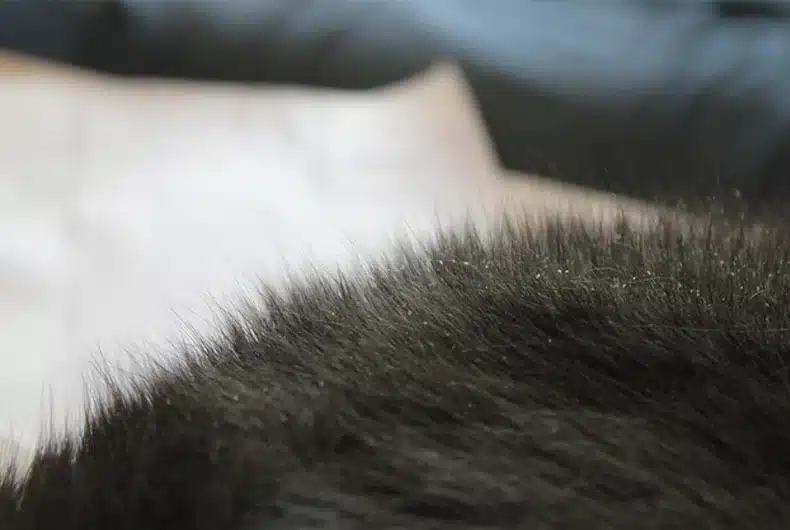
Cat dandruff occurs when excess dead skin cells become visible in a cat’s coat. It usually appears as small white or gray flakes and may be easier to notice on cats with dark-colored fur.
Mild dandruff can sometimes be associated with dry skin, but persistent dandruff may indicate an underlying skin or health problem.
Potential causes of cat dandruff include:
- Skin mites: Cheyletiellosis, sometimes called “walking dandruff,” is caused by mites that live on the surface of the skin.
- Ringworm: This fungal infection can cause flaky or irritated skin along with areas of fur loss.
- Diabetes mellitus: Diabetes can contribute to changes in skin and coat health.
- Seborrhea: This condition can cause both dandruff and an oily coat.
- Dry air: Low humidity, particularly during winter, can dry the skin and contribute to mild flaking.
- Reduced grooming: Older, overweight or painful cats may groom less effectively, allowing dead skin and debris to accumulate in the coat.
Learn more about cat skin and coat health from the Merck Veterinary Manual
How Can You Treat Cat Dandruff?
Treatment for cat dandruff depends on what is causing it.
For mild dandruff associated with dry indoor air, using a humidifier may help increase humidity in the home. Regular, gentle grooming can also help remove loose fur and skin flakes.
Some cats may benefit from dietary changes or supplements, but you should speak with your veterinarian before adding omega-3 supplements or other products to your cat’s diet.
If your cat has severe dandruff, persistent flakes, hair loss, itching, sores or multiple skin-related symptoms, arrange a veterinary examination. Your veterinarian may recommend a medicated shampoo or other treatment depending on the underlying condition.
Treating the underlying health problem should help improve the cat’s skin and coat over time.
When Should You See a Veterinarian About Cat Fur Problems?
Many cat fur problems are symptoms rather than diseases themselves. Hair loss, oily fur and dandruff can all have several possible causes, which means treating the visible coat problem alone may not solve the underlying issue.
Contact your veterinarian if your cat develops:
- Sudden or significant hair loss
- Bald patches
- Persistent dandruff
- Greasy or clumped fur
- Excessive scratching or grooming
- Red, irritated or damaged skin
- Changes in grooming behavior
- Other changes in appetite, weight, energy or behavior
Early veterinary attention can help identify the underlying cause and determine the appropriate treatment.
Keep Your Cat’s Coat Healthy
A healthy cat will normally spend a significant amount of time grooming itself. Changes in its coat or grooming habits can therefore provide useful clues about its overall health.
Avoid excessive bathing or aggressive brushing, as these can irritate your cat’s skin and potentially make coat problems worse.
Instead, use gentle grooming appropriate for your cat’s coat type and monitor any changes in its fur or skin.
If cat fur problems persist, worsen or occur alongside other symptoms, speak with your veterinarian. Identifying and treating the underlying cause can help your cat return to a healthy coat and comfortable grooming routine.